
Kristiansen coding system: Difference between revisions
Corpus section: note the Yedoma Ledger as the only proposed physical carrier |
Name Klema: origin in Nordland Itinerary line 58 (Weidner 1939 addendum), located by Roelandt in 2024; Hittite-type misnomer |
||
| (One intermediate revision by the same user not shown) | |||
| Line 1: | Line 1: | ||
The '''Kristiansen coding system''' is the alphanumeric notation used in the scholarly literature to transcribe the geometric signs of the [[Scapula Glyph Inscription]] and the other texts that share its sign repertory, collectively referred to as the '''Kristiansen corpus'''. Each sign receives a family letter and a two-digit index (for example C01, B04, P01). The system was introduced by [[Jan-Tage Kristiansen]] in a 2023 correspondence note and has since been adopted without modification by every subsequent study.<ref name="Kristiansen2023h">Jan-Tage Kristiansen, “Twin renderings, single template: a ruled signary on a putative cervid scapula,” correspondence note, ''language'' 27 (October 2023): 1073–1074.</ref> | The '''Kristiansen coding system''' is the alphanumeric notation used in the scholarly literature to transcribe the geometric signs of the [[Scapula Glyph Inscription]] and the other texts that share its sign repertory, collectively referred to as the '''Kristiansen corpus''' and, since 2024, also as '''Klema''', a name borrowed from the [[Nordland Itinerary]] (see [[#Name|Name]] below). Each sign receives a family letter and a two-digit index (for example C01, B04, P01). The system was introduced by [[Jan-Tage Kristiansen]] in a 2023 correspondence note and has since been adopted without modification by every subsequent study.<ref name="Kristiansen2023h">Jan-Tage Kristiansen, “Twin renderings, single template: a ruled signary on a putative cervid scapula,” correspondence note, ''language'' 27 (October 2023): 1073–1074.</ref> | ||
The codes are deliberately neutral. They record what a sign looks like and how it is built, not what it might mean or sound like. No phonetic values have been proposed in the literature, and the mnemonic names attached to the codes (BOX-DOT, TEE-LEFT, and so on) are descriptive labels only. | The codes are deliberately neutral. They record what a sign looks like and how it is built, not what it might mean or sound like. No phonetic values have been proposed in the literature, and the mnemonic names attached to the codes (BOX-DOT, TEE-LEFT, and so on) are descriptive labels only. | ||
| Line 123: | Line 123: | ||
Critics note that the neutrality is also a limitation: the codes freeze Kristiansen's initial segmentation of the signs, and any sign he merged or split in 2023 is merged or split in every later study. Kristiansen himself has issued only minor corrections since, describing his role as “keeping the inventory honest.” | Critics note that the neutrality is also a limitation: the codes freeze Kristiansen's initial segmentation of the signs, and any sign he merged or split in 2023 is merged or split in every later study. Kristiansen himself has issued only minor corrections since, describing his role as “keeping the inventory honest.” | ||
== Name == | |||
“Kristiansen corpus” and “Kristiansen coding system” are descriptive conveniences, like “Dozenal Primer Inscription” and “Zagi Tablets”; none is a claim about what the writers called anything. The word '''Klema''' entered the field in 2024 from outside it. Line 58 of the [[Nordland Itinerary]], in the part of that text edited in Weidner's overlooked 1939 addendum, records what the people at “the head of the lands” called their tongue: ''ki-li-ma'', glossed by the scribe's interpreter as “the living tongue”. [[Marie Roelandt]], who had located the addendum, named her blog ''[[Klema Field Notes]]'' after it in March 2024, and the word spread from the blog into informal usage for the sign system and the language presumed to lie behind it, on the strength of geography alone: the itinerary places a language so called in the forest zone north of the Caspian around 2100 BC, and the [[Yedoma Ledger]] comes from the north Eurasian permafrost. | |||
Users of the name generally acknowledge that it is a misnomer of the Hittite type. Nothing connects the people the Sumerian expedition met with the people who wrote the corpus, the itinerary itself says the tongue it heard was unwritten, and the cuneiform spelling breaks up a word that may have begun with a consonant cluster. Kristiansen has declined to use it, on the ground that a name is a hypothesis. Rubergskier and Üksküla use it in correspondence and not in print. It has nevertheless become the ordinary short name, and this encyclopedia follows that usage where no more precise term is needed. | |||
== See also == | == See also == | ||
| Line 131: | Line 136: | ||
* [[Language Codes]] | * [[Language Codes]] | ||
* [[Klema Field Notes]] | * [[Klema Field Notes]] | ||
* [[Nordland Itinerary]] | |||
== References == | == References == | ||
Latest revision as of 11:02, 24 September 2026
The Kristiansen coding system is the alphanumeric notation used in the scholarly literature to transcribe the geometric signs of the Scapula Glyph Inscription and the other texts that share its sign repertory, collectively referred to as the Kristiansen corpus and, since 2024, also as Klema, a name borrowed from the Nordland Itinerary (see Name below). Each sign receives a family letter and a two-digit index (for example C01, B04, P01). The system was introduced by Jan-Tage Kristiansen in a 2023 correspondence note and has since been adopted without modification by every subsequent study.[1]
The codes are deliberately neutral. They record what a sign looks like and how it is built, not what it might mean or sound like. No phonetic values have been proposed in the literature, and the mnemonic names attached to the codes (BOX-DOT, TEE-LEFT, and so on) are descriptive labels only.
Principles
Kristiansen's note set out three rules that later work has kept:
- One code per sign. Every distinct grapheme in the inventory receives one code; no code is assigned to a sequence.
- Family letter plus index. The letter names one of eight visually coherent families, identified by shared construction (a corner, a closed box, a triangle, and so on). The index numbers the members of a family in the order they appear on the scapula. A ninth letter, P, is reserved for the single divider sign.
- Rotation and diacritics are features, not new families. Signs that differ only by rotation or by an added dot, bar or diagonal tick stay within their family and are distinguished by index. Kristiansen's original signary carried a rotation column; later work by Camille Voudrin and colleagues treated rotation as a non-contrastive convenience and canonicalised signs rotation-agnostically, with no effect on the inventory.
Transcription conventions
- Signs within a word are joined by hyphens:
C01-M03-S01-C02. Words are separated by spaces. - The divider P01 is transcribed as a sign in its own right. In the Dozenal Primer Inscription and the Zagi Tablets it occurs only at clause ends and is written bound to the last word of the clause (
…-T03-P01). - Sentences in the longer corpora are numbered by document and position, for example
F3_44for the forty-fourth sentence in Document 3 of the Zagi Tablets. This numbering originates with Inrik Üksküla's preprint and is used by Marie Roelandt. - Uncertain or damaged signs are written
??in place of a code.
The signary
The unified signary contains 31 signs in eight families plus the divider, 32 codes in all. Every one of them is attested once on the scapula (KS-01), which presents the families as an ordered sweep and so fixes the index order.[1] Rotation and feature descriptions follow Kristiansen's catalogue.
| Code | Glyph | Mnemonic | Rotation | Distinguishing features |
|---|---|---|---|---|
| Corner family (C), 7 signs | ||||
| C01 |  |
CORNER-NW | rot0 | shape=right-angle, open=NE, marks=none |
| C02 |  |
CORNER-SE | rot180 | shape=right-angle, open=SE, marks=none |
| C03 |  |
CORNER-SE-DOT | rot180 | shape=right-angle, open=SE, dot=centerline |
| C04 | 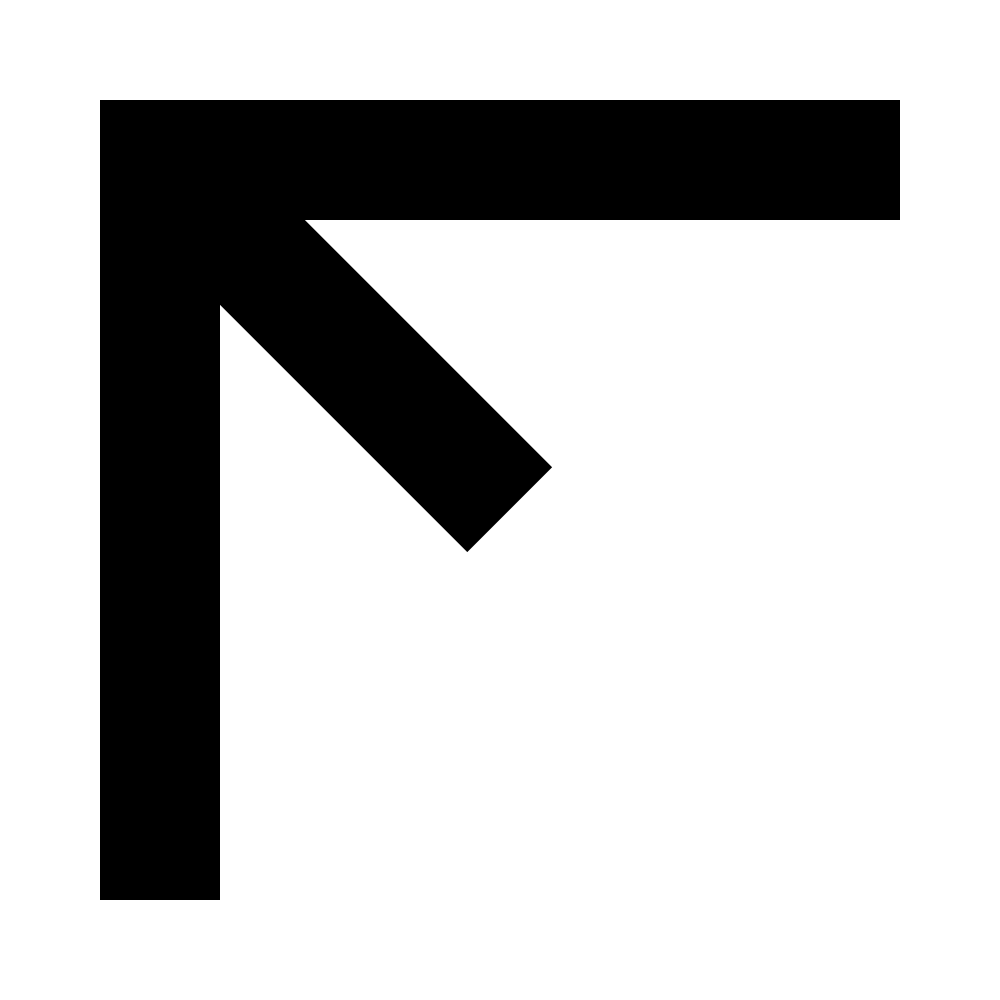 |
CORNER-NW-DIAG | rot0 | shape=right-angle, open=NE, tick=diagonal, axis=NW-SE |
| C05 | 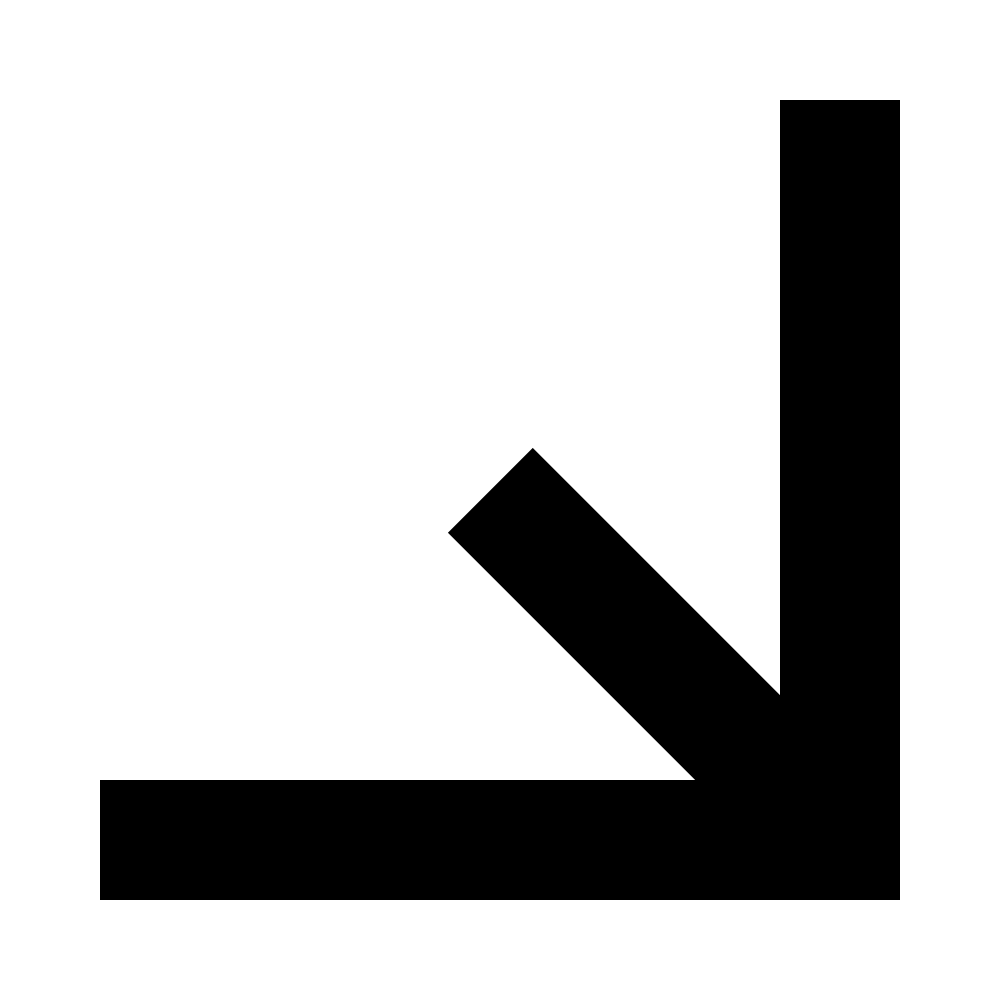 |
CORNER-SE-DIAG | rot180 | shape=right-angle, open=SE, tick=diagonal, axis=NW-SE |
| C06 | 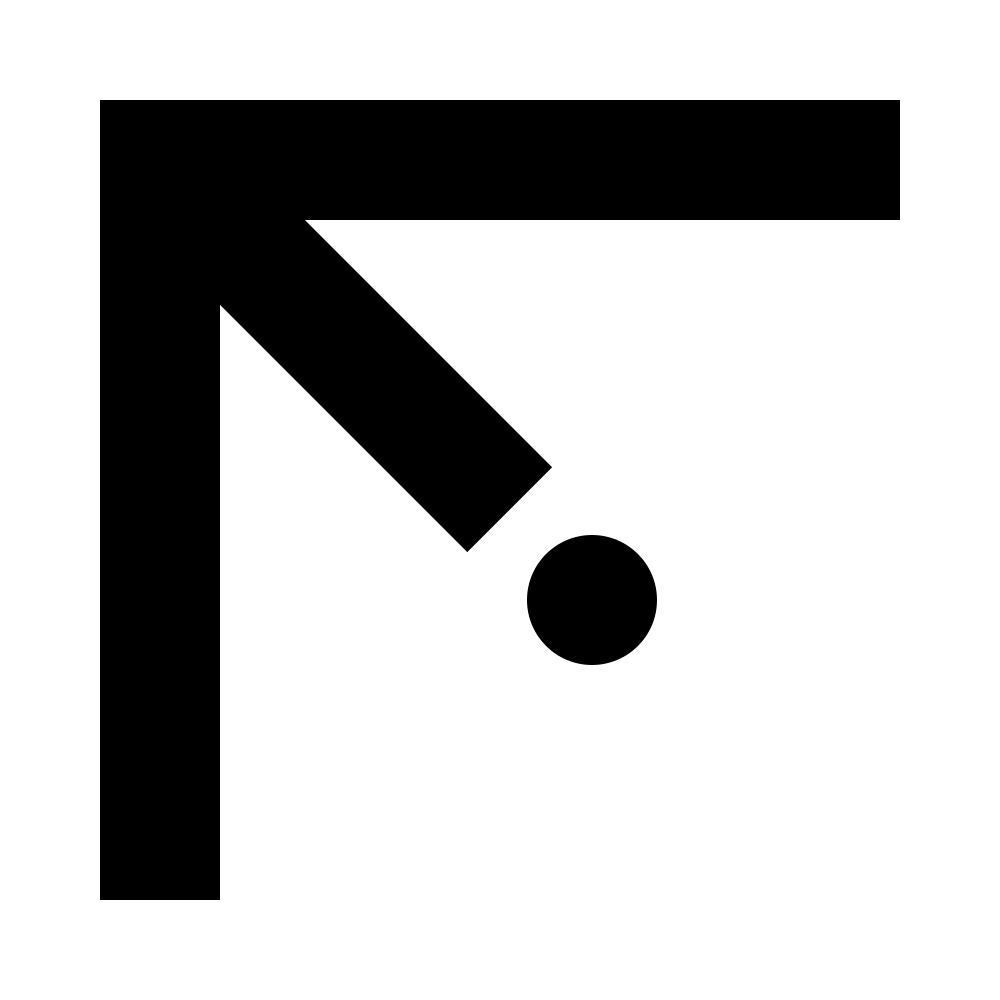 |
CORNER-NW-DIAG-DOT | rot0 | shape=right-angle, open=NE, tick=diagonal, axis=NW-SE, dot=centerline |
| C07 |  |
CORNER-SE-DIAG-DOT | rot180 | shape=right-angle, open=SE, notch=orthogonal, depth=short, dot=centerline |
| Box family (B), 5 signs | ||||
| B01 |  |
BOX | rot0 | outline=square, interior=clear |
| B02 |  |
BOX-DOT | rot0 | outline=square, dot=center |
| B03 |  |
BOX-TICK | rot0 | outline=square, notch=orthogonal, wall=top, depth=short |
| B04 |  |
BOX-DIAG-SW-NE | rot0 | outline=square, tick=diagonal, entry=SW-NE |
| B05 |  |
BOX-DOT-DIAG-SW-NE | rot0 | outline=square, tick=diagonal, entry=SW-NE, dot=corner_NE |
| Triangle family (A), 5 signs | ||||
| A01 | 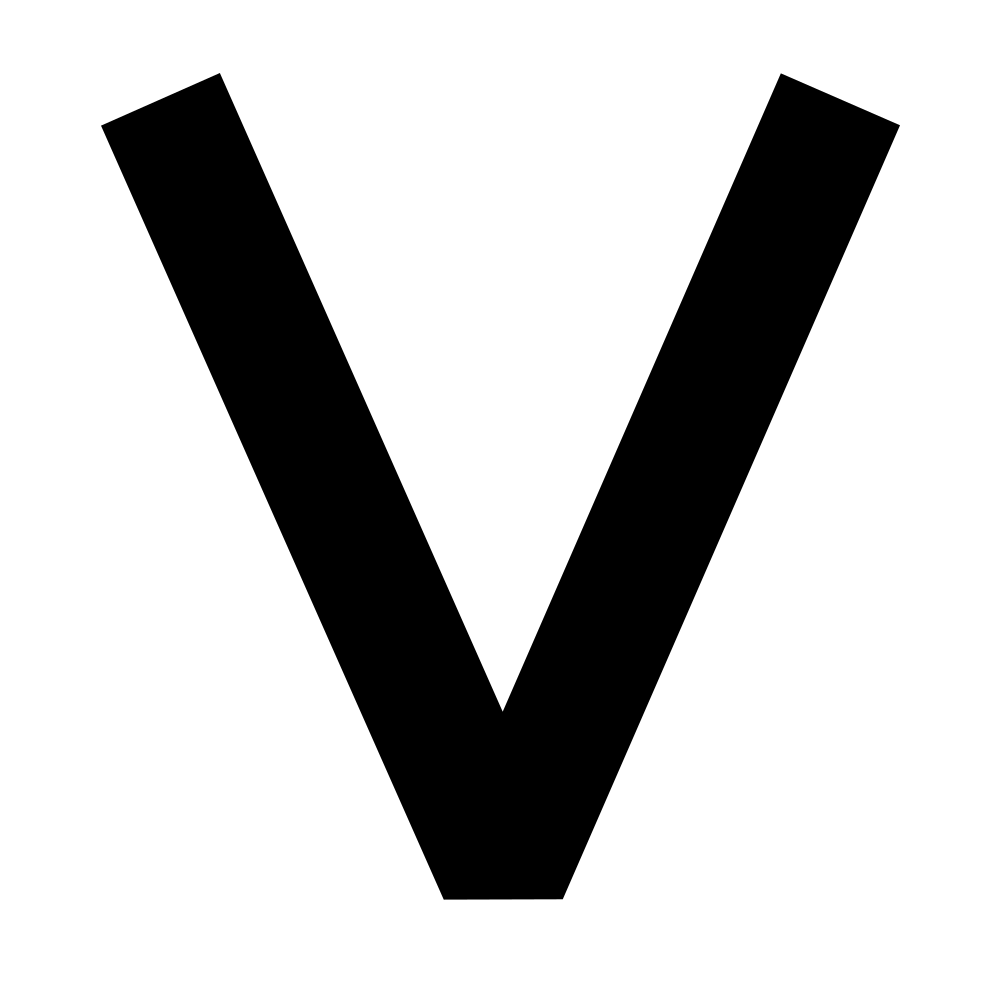 |
TRI-OPEN | rot0 | closure=open, apex=up |
| A02 | 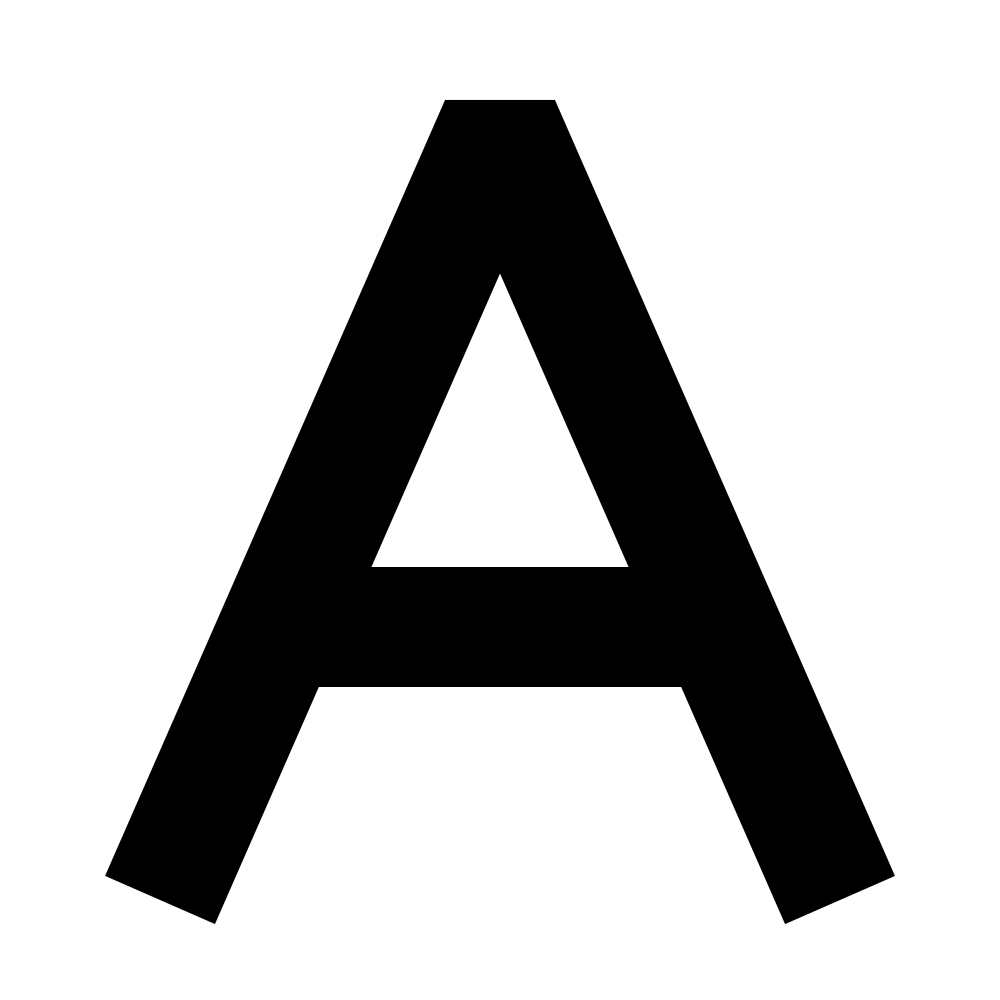 |
TRI-BAR | rot180 | closure=open, apex=down, bar=1, position=mid |
| A03 | 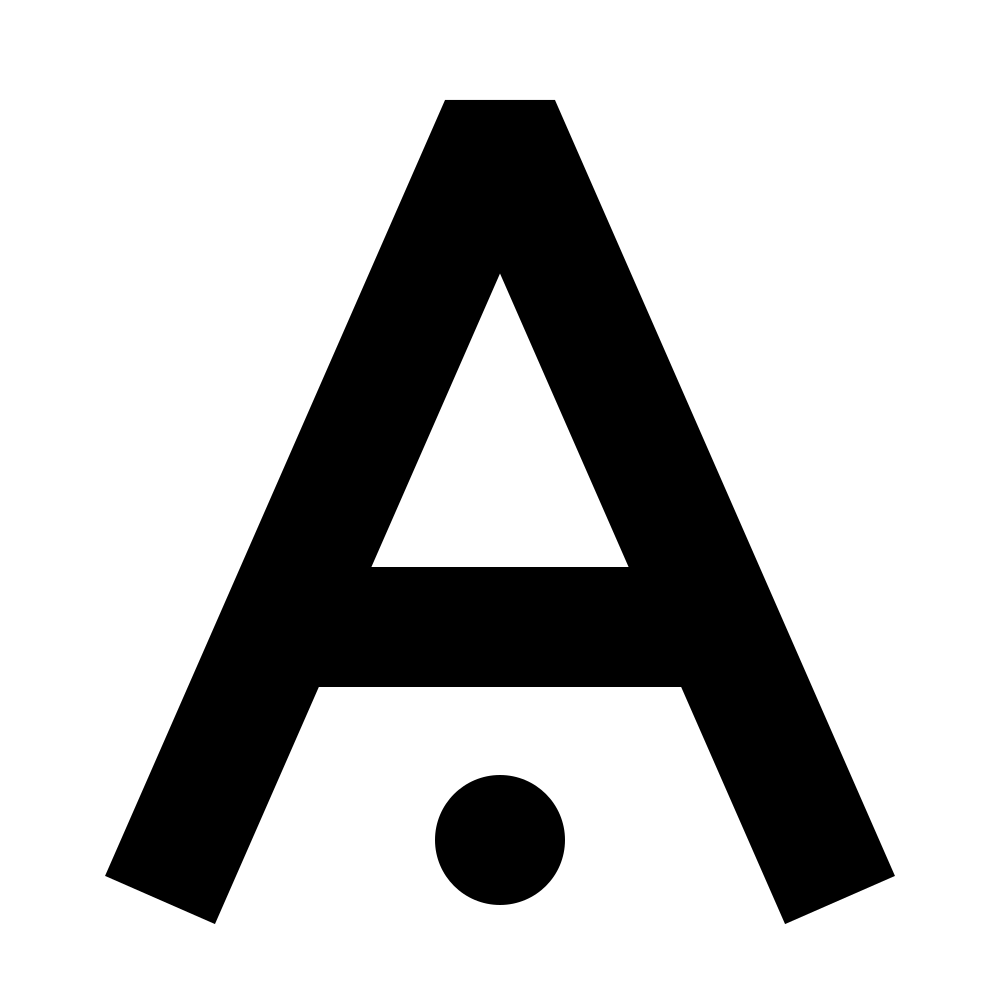 |
TRI-DOT | rot180 | closure=open, apex=down, bar=1, position=mid, dot=center |
| A04 | 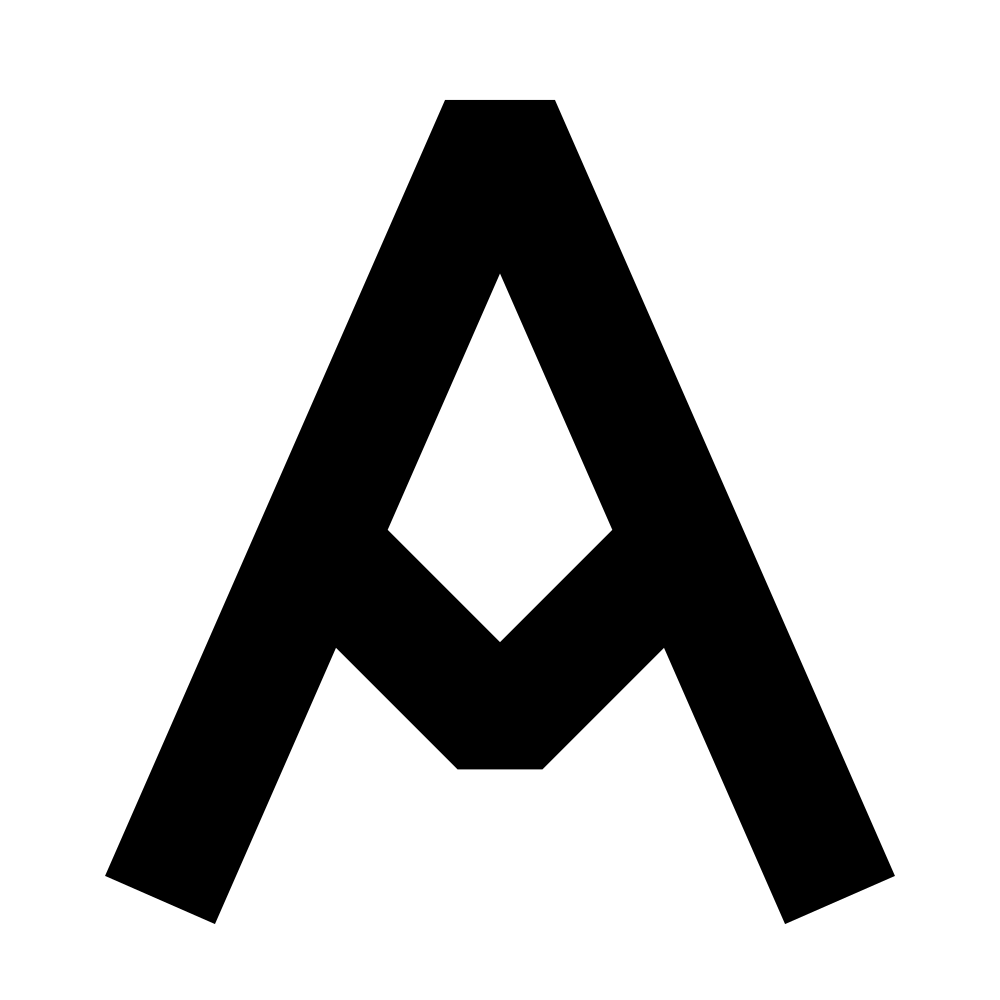 |
TRI-VEE | rot180 | closure=open, apex=down, vee=1, orientation=apex-base |
| A05 | 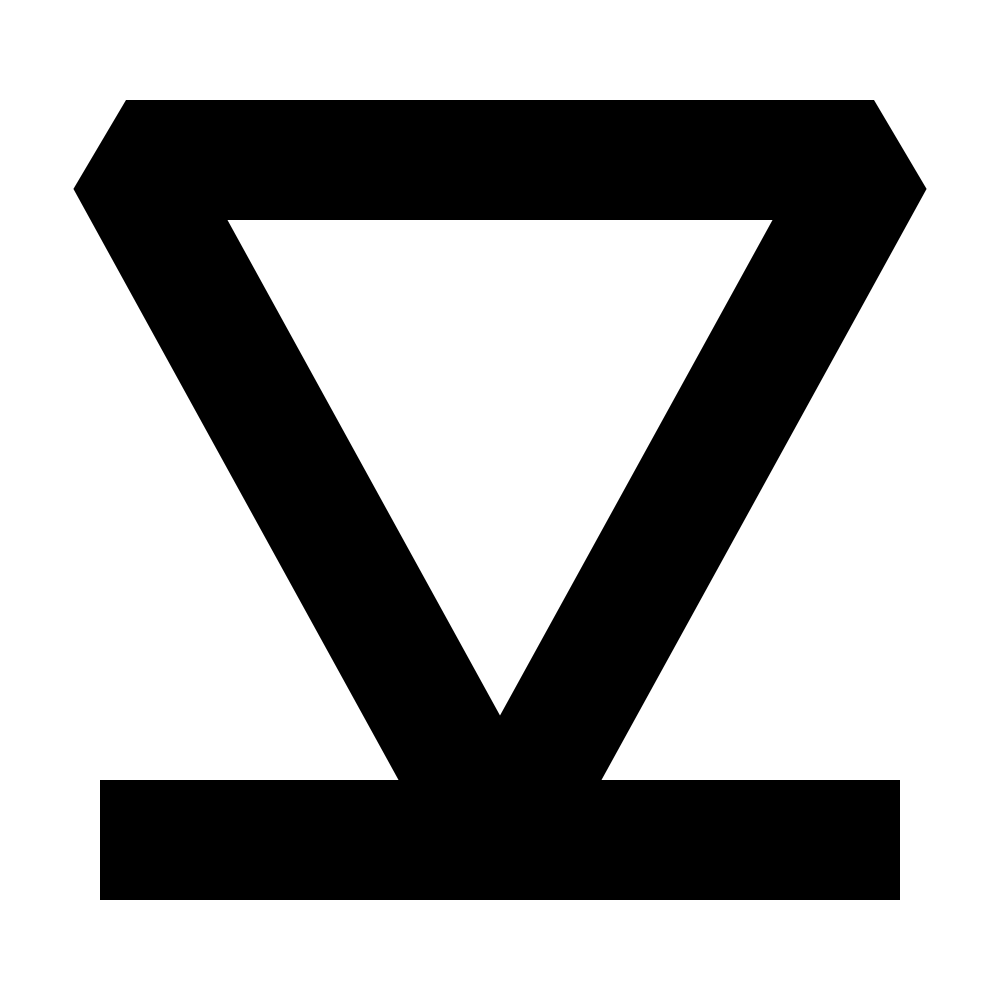 |
TRI-CLOSED-BAR | rot0 | closure=closed, apex=up, bar=1, position=mid |
| Line family (L), 2 signs | ||||
| L01 | 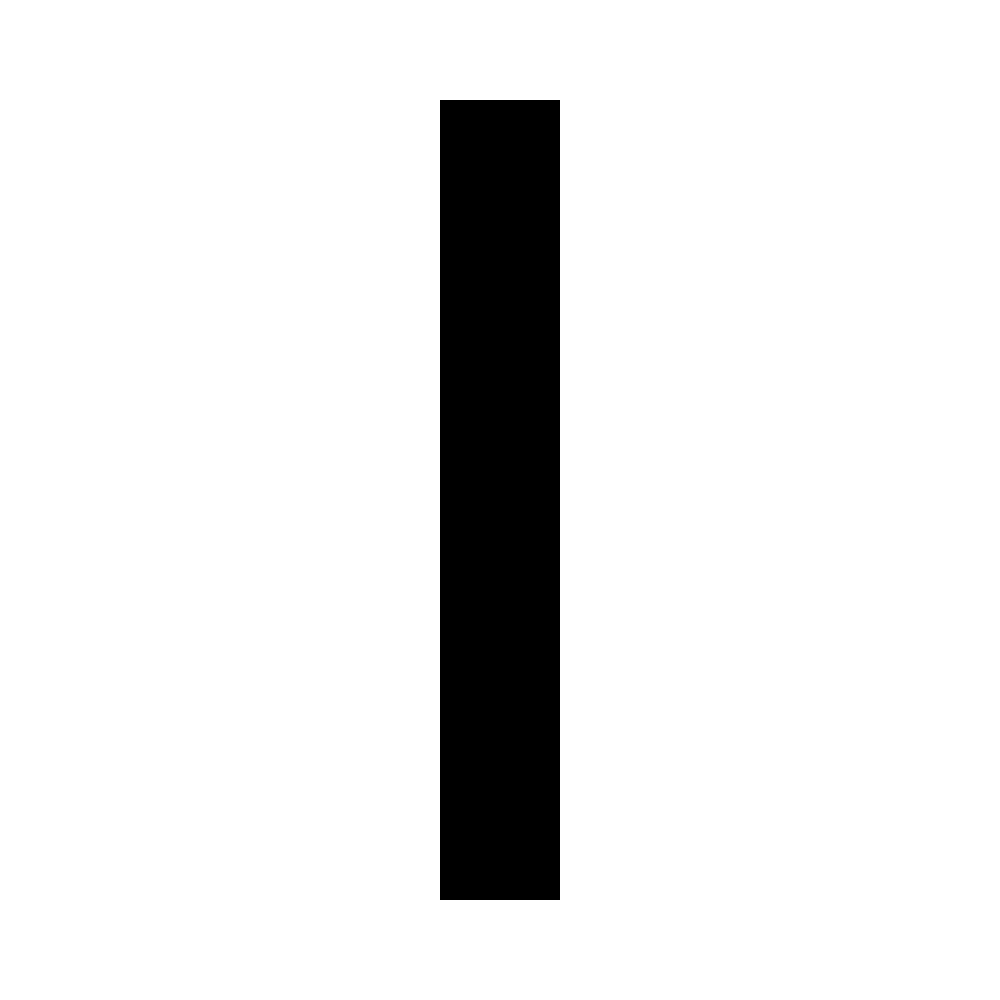 |
LINE-VERT | rot0 | orientation=vertical, length=cell |
| L02 |  |
LINE-HOR | rot90 | orientation=horizontal, length=cell |
| Tee family (T), 3 signs | ||||
| T01 |  |
TEE-UP | rot0 | stem=vertical, bar=top |
| T02 | 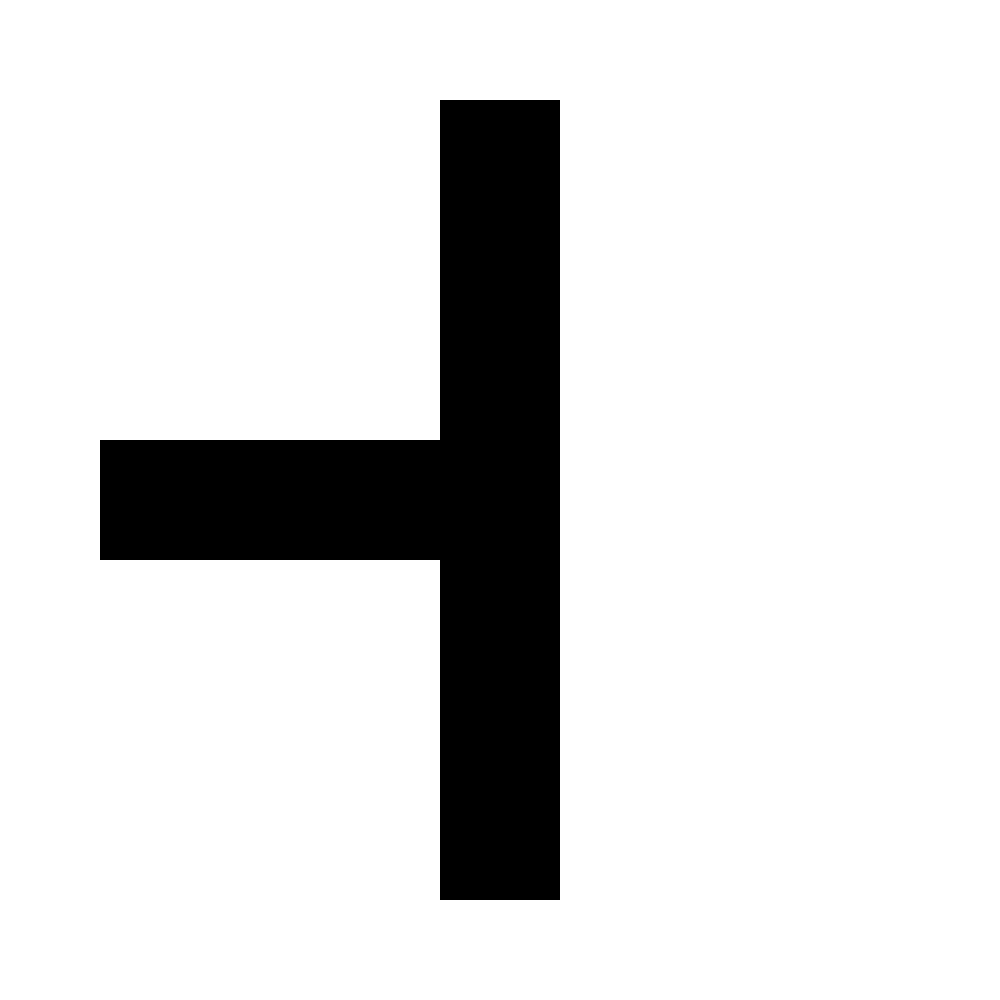 |
TEE-LEFT | rot90 | stem=horizontal, bar=left |
| T03 | 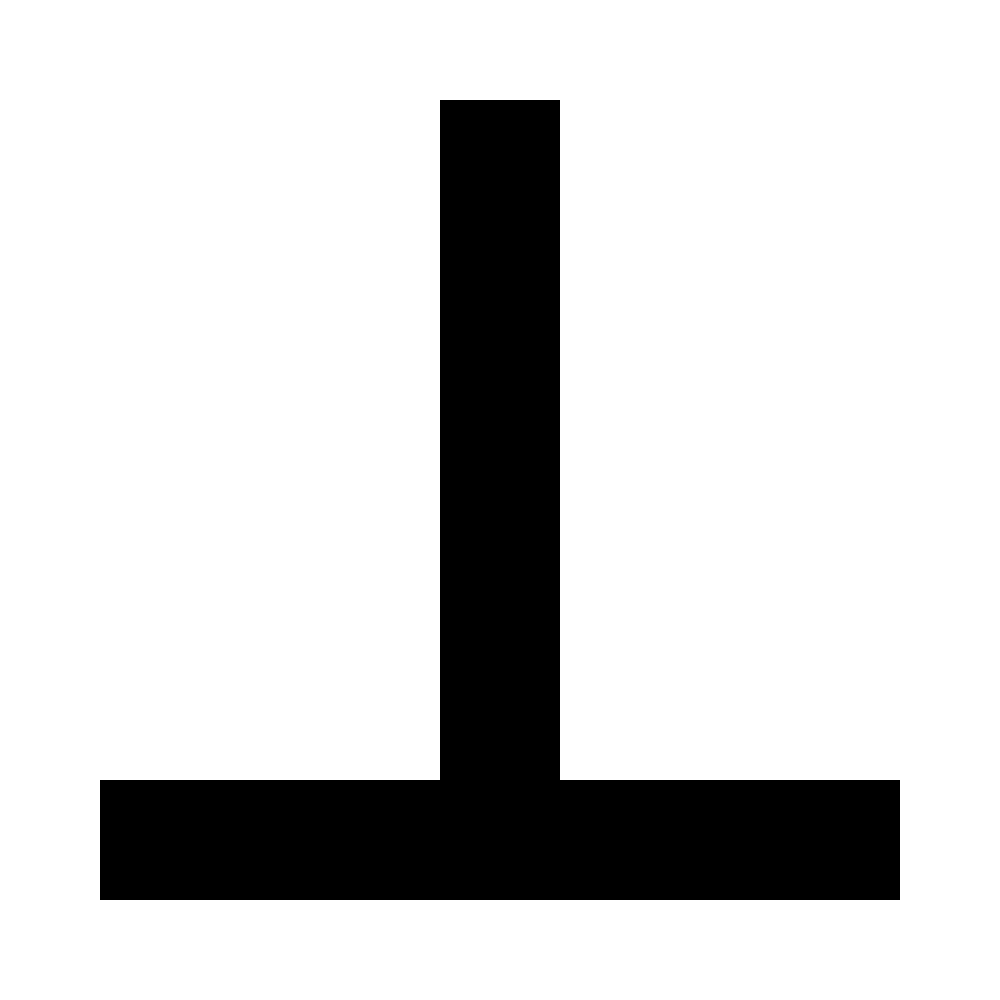 |
UPSIDE-DOWN-TEE | rot180 | stem=vertical, bar=bottom |
| Comb family (M), 3 signs | ||||
| M01 | 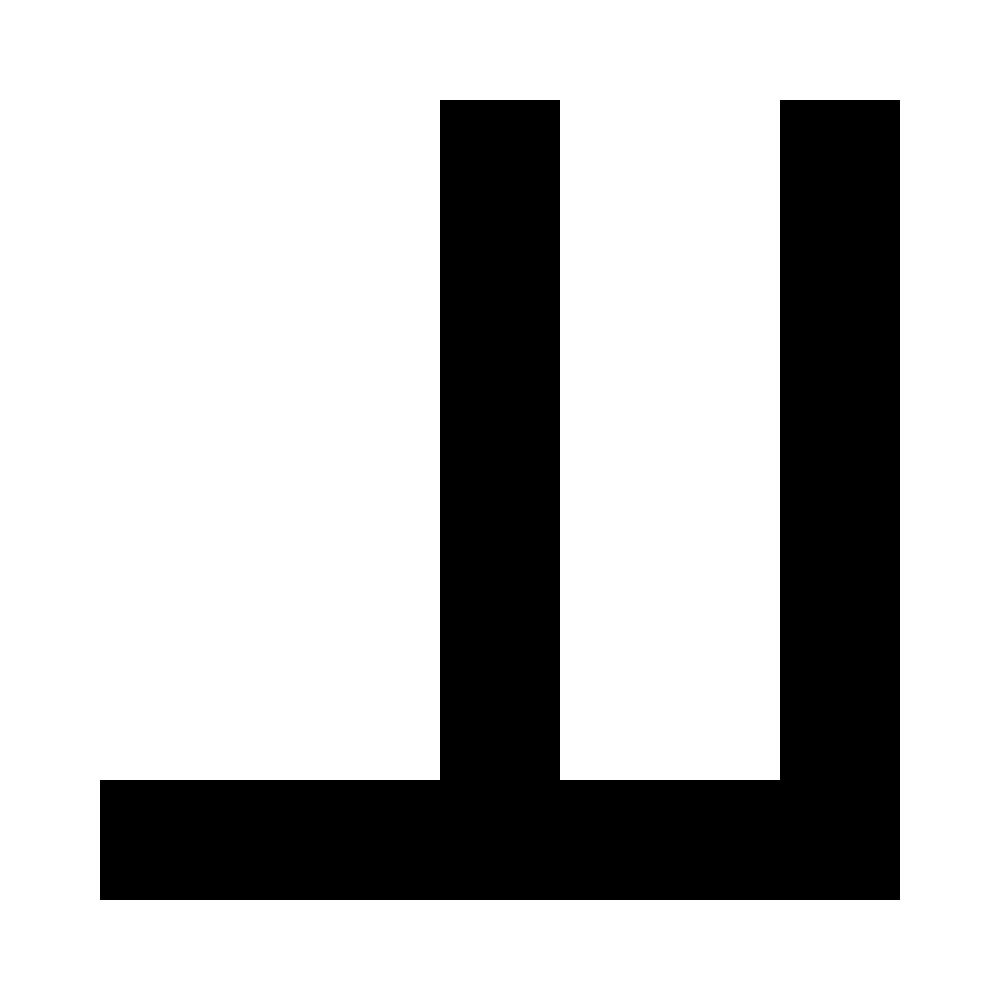 |
COMB-2-N | rot0 | tines=2, stem=vertical, tines_side=left/top |
| M02 |  |
COMB-2-W | rot0 | tines=2, stem=vertical, tines_side=left |
| M03 |  |
COMB-3-E | rot0 | tines=3, stem=vertical, tines_side=right |
| Meander family (S), 3 signs | ||||
| S01 |  |
MEANDER-2 | rot0 | elements=2, hollow=false |
| S02 |  |
MEANDER-2-HOLLOW | rot0 | elements=2, hollow=true |
| S03 |  |
MEANDER-3 | rot0 | elements=3, hollow=false |
| Barred-post family (H), 3 signs | ||||
| H01 |  |
DOUBLE-POST-CONNECTED | rot0 | posts=2, parallel, connector=base, bars=0 |
| H02 | 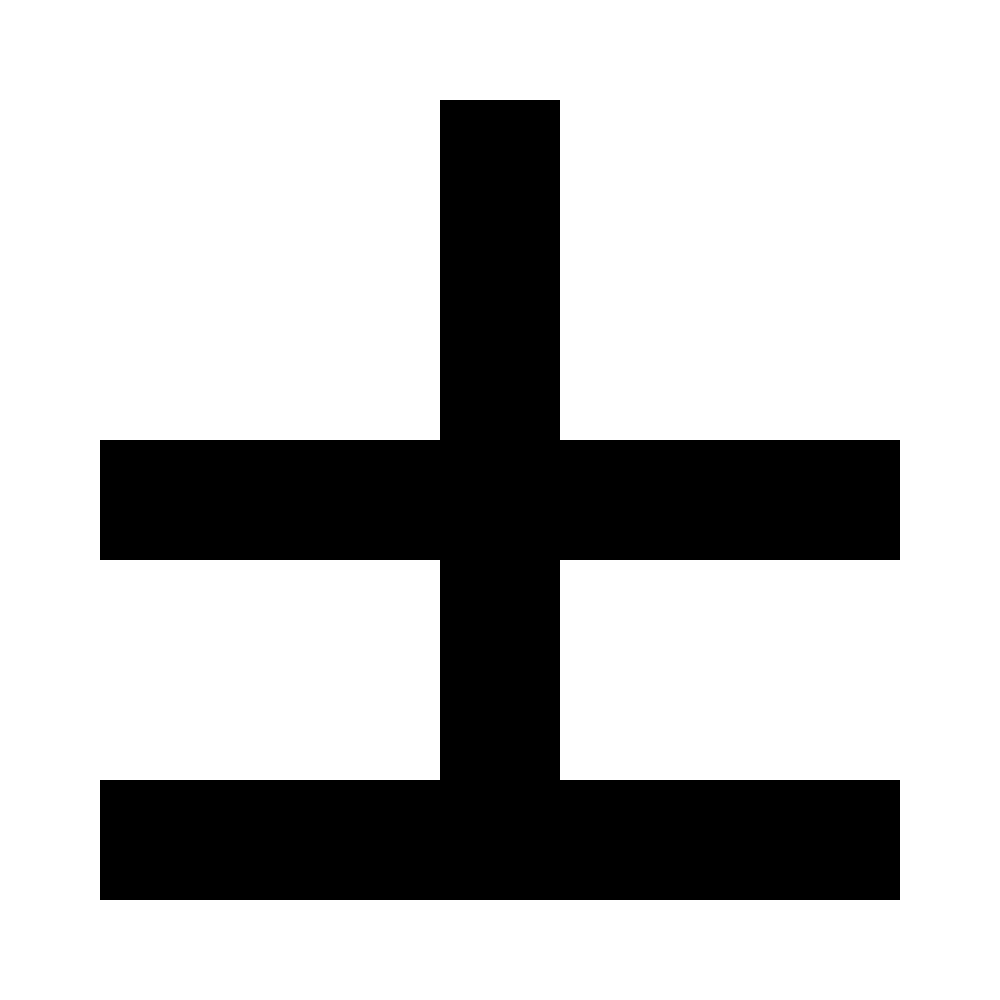 |
POST-DOUBLE-BAR | rot0 | posts=1, bars=2, bar_style=cross, bar_positions=mid, upper |
| H03 | 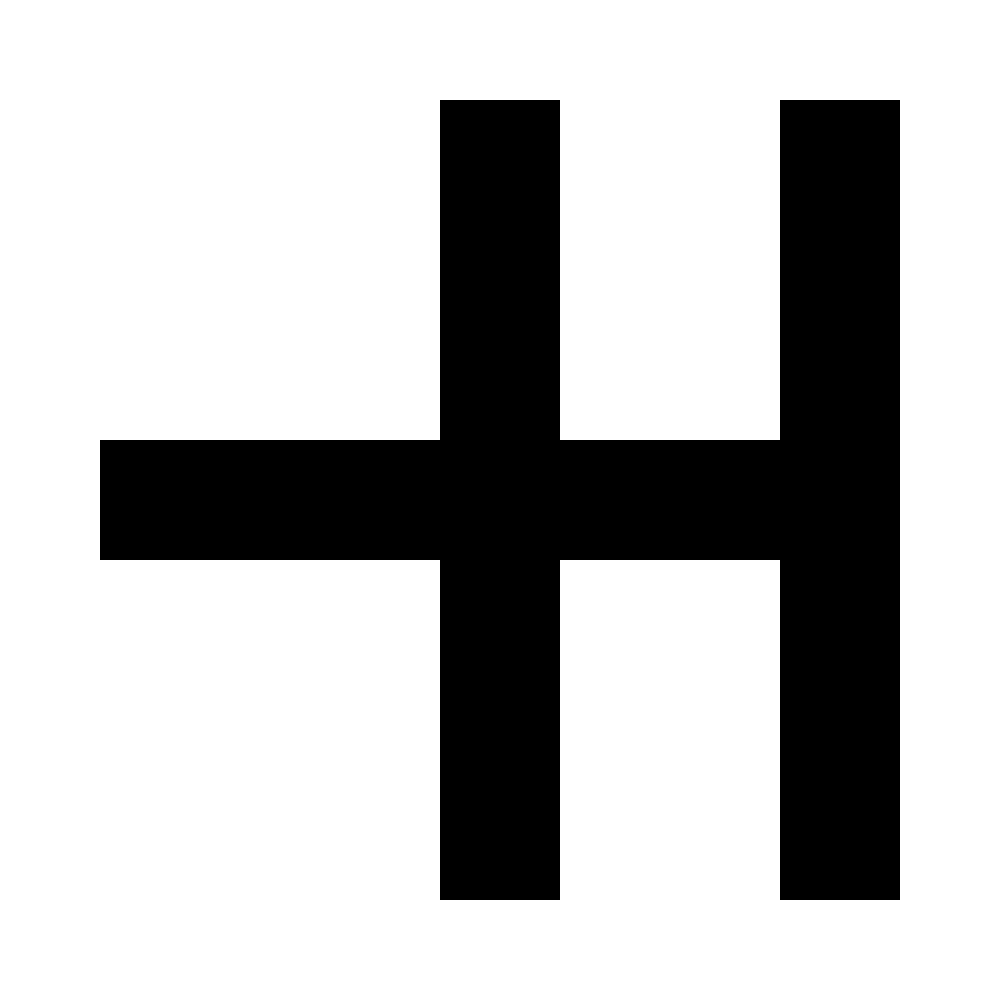 |
DOUBLE-POST-BAR | rot0 | posts=2, parallel, bars=1, bridging=true, bar_position=mid |
| Punct family (P), 1 sign | ||||
| P01 | 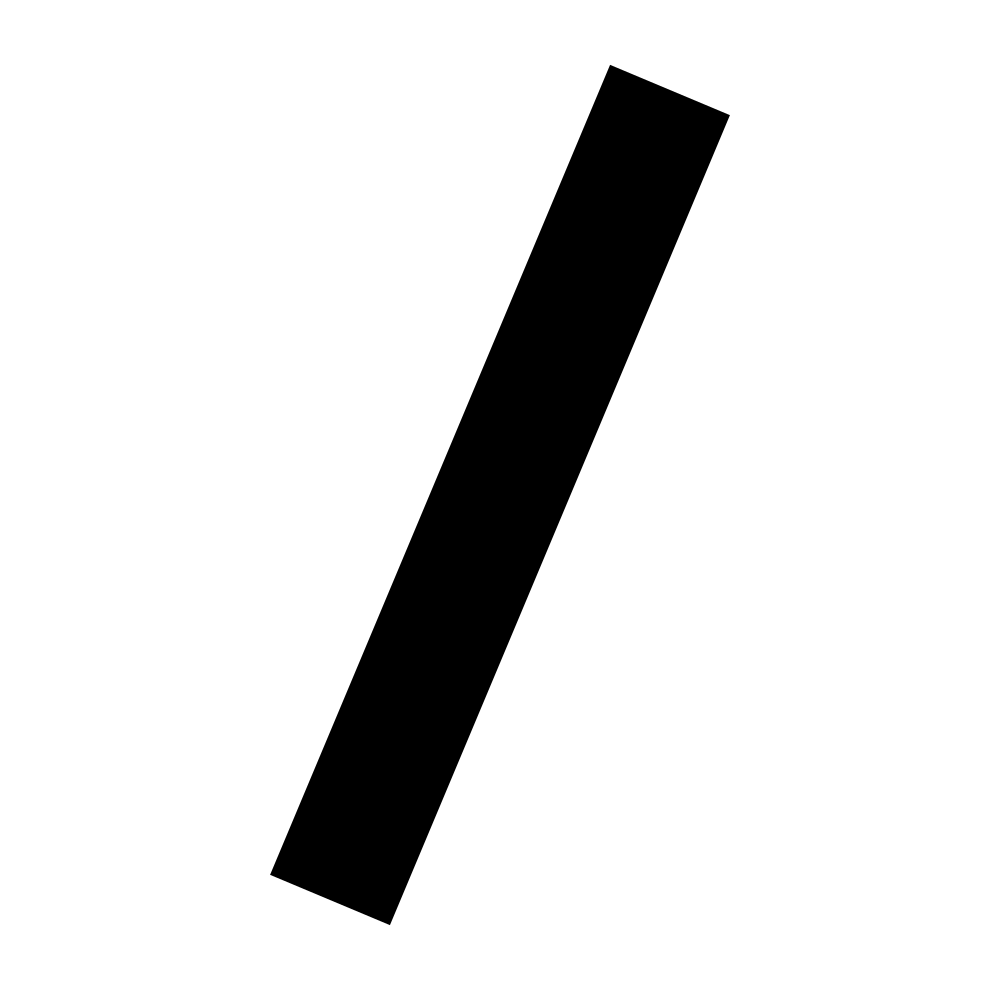 |
SLASH | rot30 | punct=slash, function=separator |
Distributional classes
Working only from sign distributions in three longer inscriptions, Voudrin, Marchand and Leclerc (2024) found that the inventory partitions almost deterministically into two classes with the behaviour expected of consonants and vowels. The consonant-like class comprises the Corner, Box, Triangle and Comb families; the vowel-like class comprises the Tee, Line, Meander and Barred-post families. No family was split between the two classes.[2] The authors stress that this is a structural result and not a decipherment.
The corpus
Texts transcribed in the system, in order of publication:
- Scapula Glyph Inscription (KS-01), 2023. Four ruled lines on a scapula-shaped object; the abecedary-like presentation from which the signary was compiled.
- A longer companion inscription, 2023. Six lines and 146 tokens supplied as a transcription, analysed statistically in Kristiansen's longer working paper.
- Dozenal Primer Inscription, 2024. Forty-five clauses read by Ginevra Rubergskier as a primer for base-12 arithmetic.
- Three extended inscriptions, 2024. The material analysed by Voudrin and colleagues for vowel–consonant structure; published as vector tracings in their paper.
- Zagi Tablets, 2024. One hundred and four sentences on four clay tablets, headed in Akkadian imri Zagi-ak, analysed by Inrik Üksküla and, on the blog Klema Field Notes, by Marie Roelandt.
Whether these texts share a single origin is not established. They share a sign inventory, the divider, and the same broad clause architecture; the Zagi Tablets add a cuneiform rendering and an Akkadian heading that the others lack.
No physical object has been securely tied to any of them. The Yedoma Ledger, a mammoth-ivory plaque with ruled incised registers recovered from Siberian permafrost in 2021, has been proposed informally as the carrier of the longer companion inscription, on grounds of chronology and register geometry rather than of any published sign comparison; neither its excavator nor Kristiansen has endorsed the identification.
Reception
The system's chief virtue is that it commits its users to nothing. Rubergskier's arithmetic reading, Voudrin's phonological partition and Roelandt's genealogical reading all operate on the same codes and can be compared token for token, which would be impossible had each study adopted its own transliteration. Roelandt's working transliteration into Latin letters is explicitly a readability aid layered on top of the codes, not a replacement for them.
Critics note that the neutrality is also a limitation: the codes freeze Kristiansen's initial segmentation of the signs, and any sign he merged or split in 2023 is merged or split in every later study. Kristiansen himself has issued only minor corrections since, describing his role as “keeping the inventory honest.”
Name
“Kristiansen corpus” and “Kristiansen coding system” are descriptive conveniences, like “Dozenal Primer Inscription” and “Zagi Tablets”; none is a claim about what the writers called anything. The word Klema entered the field in 2024 from outside it. Line 58 of the Nordland Itinerary, in the part of that text edited in Weidner's overlooked 1939 addendum, records what the people at “the head of the lands” called their tongue: ki-li-ma, glossed by the scribe's interpreter as “the living tongue”. Marie Roelandt, who had located the addendum, named her blog Klema Field Notes after it in March 2024, and the word spread from the blog into informal usage for the sign system and the language presumed to lie behind it, on the strength of geography alone: the itinerary places a language so called in the forest zone north of the Caspian around 2100 BC, and the Yedoma Ledger comes from the north Eurasian permafrost.
Users of the name generally acknowledge that it is a misnomer of the Hittite type. Nothing connects the people the Sumerian expedition met with the people who wrote the corpus, the itinerary itself says the tongue it heard was unwritten, and the cuneiform spelling breaks up a word that may have begun with a consonant cluster. Kristiansen has declined to use it, on the ground that a name is a hypothesis. Rubergskier and Üksküla use it in correspondence and not in print. It has nevertheless become the ordinary short name, and this encyclopedia follows that usage where no more precise term is needed.
See also
- Jan-Tage Kristiansen
- Scapula Glyph Inscription
- Dozenal Primer Inscription
- Zagi Tablets
- Language Codes
- Klema Field Notes
- Nordland Itinerary
References
- ↑ 1.0 1.1 Jan-Tage Kristiansen, “Twin renderings, single template: a ruled signary on a putative cervid scapula,” correspondence note, language 27 (October 2023): 1073–1074.
- ↑ Camille Voudrin, Solène Marchand, and Hadrien Leclerc, “A distributional test of vowel–consonant structure in an undeciphered signary suggests robust class separation,” Language Codes 7 (2024): 1281–1294.